New Publications: Books
Ulrike Schuerkens (Ed.). West African Women Entrepreneurs in a Glocal World. Published March 24, 2025 by Routledge. ISBN: 9781032795973
Abstract
More African women than men become entrepreneurs, with women often balancing time caring for their households with small enterprises such as setting up shops in front of their homes, renting market stalls, or setting up hairstyling businesses.
This book considers these micro-level instances of entrepreneurship, as well as cases of more established high-status entrepreneurs, to build a picture of women entrepreneurs in West African societies, and their wider role in socio-economic development. Small and medium enterprises are seen as agents of change in the Global South, vital for job creation and poverty reduction, but women often face barriers which hinder their entrepreneurial success, such as lack of funding, useful networks, or inhibitive gender stereotypes. This book highlights cases of gender and economic success, to demonstrate the significant potential of the female economy to generate progress and change.
This book will be an important read for students and researchers of entrepreneurship, business, gender, development, and economic sociology in Africa.
New Publications: Articles & book chapters
Coggo Cristofoletti, E; Khoo, S; Rodés, V (2025) Is another internationalisation possible? Reconsidering public university engagement from a Latin American perspective. Learning and Teaching: The International Journal of Higher Education in the Social Sciences 18(2): 58-80 https://doi.org/10.3167/latiss.2025.180204
Abstract: This article discusses ‘another’ internationalisation of higher education through the lens of the ‘third mission’ of engagement from a Global South viewpoint. It recontextualises internationalisation and the third mission through the meanings and practices of university extension in Latin America. Within a Global North perspective, internationalisation of the third mission is under-studied, compared to the internationalisation of teaching and research. We offer a case study of the Montevideo Group University Association (Spanish acronym: AUGM), an association of Latin American public universities promoting academic exchange in teaching, research and extension. We further our analysis and discussion through a within-case analysis of Uruguay’s Udelar, the eponymous founding location of AUGM. At a moment of radical, debilitating global and national marketisation and privatisation focused on the individual, the case of AUGM’s internationalisation of regional public extension is complemented by Udelar’s case-within-a-case of extension, tying widened higher education access to national democratic reforms.
Coelho, D.; Khoo, S. Indelicato, M (2025) Naming, sustaining, nourishing: Tensions, resistances and possibilities of Education, Anti-Racism and Decoloniality, Introduction to Special Issue on “Education, antiracism and decoloniality: tensions, resistances, and possibilities”, Educação, Sociedade & Culturas [Education, Society & Cultures], 70, 1-7, https://doi.org/10.24840/esc.vi70.1586
Abstract: In the spring of 2024, we issued a call for a thematic number titled “Education, antiracism and decoloniality: tensions, resistances, and possibilities” as part of Educação, Sociedade & Culturas [Education, Society & Cultures], a multilingual journal of CIIE – Centre for Research and Intervention in Education of the Faculty of Psychology and Education Sciences of the University of Porto, Portugal, as a result of an open call for special issues promoted by the Journal. At the time, the call for contributions stated that, in the face of particularly vicious contemporary colonial and racist violence, it is vital to call upon all antiracist and decolonial powers to understand current struggles and envision transformed futures. Keeping engaged in critical reflections about antiracist and decolonial struggles seems more necessary than ever as contexts become more urgent and demanding, and we witness a growing – and increasingly more explicit – backlash against diversity, antiracism and decoloniality.
Daniel, A. and Neubert, D. (2025). Development as Utopia? Road to a Better Future between Fiction and Lived Utopian Practice. Forum for Development Studies, 51(2): 1-21. DOI: 10.1080/08039410.2025.2314279
Abstract: Development as presented in the MDGs/SDGs is a well-planned step-by-step enterprise. If we dig deeper into the development debate, it is clear that the dilemma of eradicating poverty and achieving sustainable development is still unsolved, despite all efforts. Thus, development seems to be fictional in the sense of an unreachable utopia. Against this background, it is helpful to connect the development debate with utopian studies. We learn from utopian studies that there are not only fictional utopias as a vision of a just world, which may never be realised. There are also lived utopias that unpack alternative approaches to overcoming inequality or meeting ecological challenges, and which can be realised at least within a limited space. This applies to concepts from in the Global South, such as swaraj, buen vivir and ubuntu, or ecovillages and solidarity economies that present themselves as models for alternative development. As lived utopias, they follow future practice in a defined area in which the desired future becomes part of the present. These concepts are new models in the critical development debate. They are particularly successful in communities that share a common vision and common values. At the same time, there are doubts whether these models may be realised at the national or global. With regard to the fictional character of development goals, it is obvious that we still lack a feasible global strategy with a vision for the future that is attractive enough to gain global support and that can really be accomplished.
Genov, Nikolai (2025). Commercialization: A hatch in the sociological diagnosis of our time. Sustainable Social Development. 2(4): 2549. DOI:10.54517/ssd.v2i4.2549
Abstract: Max Weber feared a social future dominated by rational specialists “without spirit”. He considered this development a possible outcome of the interplay between all-embracing commercialization (marketization, monetization) with the rationalization (bureaucratization) of structures and processes in industrialized societies. Another observation of Weber concerned the ongoing replacement of medieval religious values with secularized-rationalist and profit-oriented ones. The predominance of such values usually fosters work productivity but also raises profound questions about the changing specifics of money. They have become central to the value systems at local, regional, and global levels. Weber was pessimistic concerning the fate of commercialization. Edward A. Ross substantially contributed to the study of commercialization as part and parcel of his efforts to put a sociological diagnosis on American society after WWI. He selected and analysed a dozen constructive and destructive cases of commercialization. Talcott Parsons studied the phenomenon in detail and called it “instrumental activism”. George Ritzer’s study on McDonaldization as a rationalization process is an effort to put a sociological diagnosis on global society. There are open questions concerning the capacity of contemporary societies and individuals to manage innovations for coping with commercialization. The empirical reference for the discussion is SpaceX, led by Elon Musk.
Genov, N. (2025). Conceptualizing Global Trends. World Futures. The Journal of New Paradigm Research. DOI: 10.1080/02604027.2025.2402040
Abstract: Numerous publications contain high-quality descriptions of causes, processes, and effects of global trends. However, very few of these publications are theoretically guided or aim at theory building. This is a handicap preventing most publications on global trends from developing high-quality explanations and prognostications. This article contains an attempt at developing a conceptual framework for resolving the issue. The attempt is based on the paradigm of social interaction and includes arguments in favor of four global trends: upgrading the rationality of organizations, individualization, spread of instrumental activism, and homogenization of culture. The decomposition of the trends makes it possible to identify their structures and dynamics. The analyzed examples usually refer to constructive processes and effects. In reality, the global trends are internally controversial and bring about both constructive and destructive processes and effects. The most challenging task for future studies concerns the interplay of the internal dynamics of each global trend with the dynamics of the configuration of global trends. The conceptualization of the dynamic configuration of interacting global trends is the core of the diagnosis of the global situation.
Khondker, H. H. (2025). Temporary migrant workers in transnational space: Understanding class ambiguity. Zanj: The Journal of Critical Global South Studies. https://scienceopen.com
Abstract: This paper has two main objectives. First, it delves into the complex dynamics of social inequality among migrant workers who, being transnational, often face dual or multiple class and status positions depending on their physical location, and their ethno-national and gender backgrounds. Their class position becomes uncertain, fluid, and unstable. Drawing comparisons with their sedentary counterparts, the ambiguity of their class positions in the home and host countries becomes apparent. Migrant workers, often driven by economic necessity or geopolitical factors, face unique challenges that distinguish their experiences from those in settled communities. By examining the multifaceted dimensions of social inequality, this paper sheds light on the distinct characteristics and implications of inequality within migrant populations while also highlighting key differences from their sedentary counterparts in their societies of origin. Second, it argues that the concept of class, as used in mainstream sociology, falls short when applied to transnational migrants. Nevertheless, the concept of class remains relevant, and conceptual innovation is needed for tackling class in the context of transnationalism. This paper strives to provide such innovation by interrelating social class with occupational status and exploring their effects on transnational migrant workers.
Khondker, H. H. (2025). The paradox of development. Economic & Political Weekly. https://cpd.org.bd
Abstract: This review article critically discusses a volume produced by leading economists and other social scientists of Bangladesh on the occasion of the fiftieth anniversary of Bangladesh’s independence.
Khondker, H. (2024). Social inequality in MENA region. In S. S. Jodhka & B. Rehbein (Eds.), Global handbook of inequality (pp. 1–17). Springer
Abstract: After providing an overview of global social inequality trends in recent times, this chapter delves into the intricate landscape of income and wealth inequality within the Middle East and North Africa (MENA) region, one of the most unequal regions in the world. Drawing upon Goran Therborn’s analytic framework of existential inequality, it goes beyond economic dimensions to highlight the multifaceted aspects of gender and health inequalities prevalent in the MENA region. The chapter not only dissects the stark realities of inequality but also illuminates instances of progress and positive change within the region.
Khoo, S (2025) Disrupting Assumptions: My 500 on the Future of Development Education. Policy and Practice, Issue 40.
(No Abstract Available)
Khoo, S (2025) Review of K. Szadkowski, Capital in Higher Education: A Critique of the Political Economy of the Sector, Learning and Teaching: The International Journal of Higher Education in the Social Sciences. 18(2): 81-83 https://doi.org/10.3167/latiss.2025.180205
(No Abstract Available)
Khoo, S (2025) Emancipation as Rebellion or Repair? Higher Education, (Un)Sustainability and Possibilities for Transformation and Public Good, Chapter 3 in Belluigi, D.Z. and Keet, A. (eds) Emancipatory Imaginations: Advancing Critical University Studies. Stellenbosch: African Sun Media. pp 44-75. https://doi.org/10.52779/9781991260741
(No Abstract Available)
Khoo, S; Kuhn, C (2025) Through the kaleidoscope: a different way of looking into digital inequalities, Human Development & Capability Association blog, February 10.
https://hd-ca.org/through-the-kaleidoscope-a-different-way-of-looking-into-digital-inequalities
Abstract: This blog offers a brief critical reflection on a collaborative article, ‘Understanding Digital Inequality: A Theoretical Kaleidoscope’, by 9 authors based in England (Caroline, Tom, Sandra Sinfield), Ireland (Su-Ming), South Africa (Laura, Warren), India (Swati), Scotland (Aisling), Canada (Sandra Abbeglen), and 3 reviewers from the journal Postdigital Science & Education who each publish a brief Comment, included with the article: Petar Jandrić, Jeremy Knox, and Alison Mackenzie.
The article explores different theoretical approaches for investigating digital inequalities, including: the capabilities approach (CA), Bourdieu’s theory of practice, cultural-historical activity theory, affective injustice, resources appropriation theory, critical pedagogy, Nancy Fraser’s tripartite model of justice, and realist social theory. Each lens is discussed separately, to explore its advantages, with examples which shed light on aspects of digital inequality. Critical realism is included as a metatheory, a philosophy for social science that goes beyond what is commonsensical and observable at first sight, to uncover hidden social structures and mechanisms embedded in sociotechnical systems. Critical realism is an emancipatory philosophy that aligns with the goals of flourishing for all, a key preoccupation of our collective. A critical perspective is crucial, since social structures, power relations, and ‘commonsensical’ ideas tend to remain invisible, making it more difficult to challenge the values, vested interests, and power relations embedded in the design and development of digital systems.
Lata, L. N. (2025). Digital Labour Platform, Resistance and Labour Protection in Bangladesh. In Shahidur Rahman & Md. Masud-All-Kamal (eds.), Social Transformation in Bangladesh. London: Routledge.
Abstract: Digital labour platforms are the newest technological wave that is reshaping and reconfiguring the economic and labour landscape. Digital platforms, often known as the gig economy, are increasingly adopting app-based models to connect consumers with workers to complete their on-demand tasks. Existing research on the gig economy and its regulation has mostly been conducted in the Global North, whereas little is known about the emergence of the gig economy in the Global South. In particular, there is a gap in the literature on how the gig economy is regulated in the Global South and what the gig workers’ working conditions and resistance opportunities are. In this context, this chapter explores the nature of gig work and gig workers associations in Bangladesh using the case of ridesharing drivers in Bangladesh as well as the implications of the digital labour platforms for labour regulation in Bangladesh and the potential applicability of existing laws and regulations to platform work.
Neubert, D. (2023). Social inequality in Africa. In: Surinder S. Jodhka/Boike Rehbein (Eds.), Global Handbook of Inequality, pp. 1-21. Cham: Springer International Publishing.
Abstract: Our sociological concepts and theories have been developed in the context of Europe and North America. The post-colonial debate reminds us that they need to be provincialized. For the analysis of inequality, simple measures such as the distribution of per capita income are still helpful. But we cannot take for granted that our standard concepts can be applied unchanged to other parts of the world with different societies and economies. For an understanding of inequality in Africa, we have to go beyond classical concepts and consider other scholarly debates. As shown by empirical studies, in Africa socio-economic positions are more vulnerable and volatile than in Europe and North America. People often combine different sources of income and their social position cannot be clearly defined by occupation or control of the means of production. Due to weak social security systems, semi-formal and informal networks play a decisive role in coping with shocks. These networks have a considerable influence on social position and patterns of inequality. The intersectional debate reminds us that inequality is also an outcome of socio-cultural factors (usually discussed are gender and race/ethnicity). In Africa, in addition to gender, we need to consider ethnicity, neo-traditional authorities and patron-client relationships, which all play a role in shaping inequality. At the same time, individual decisions make a difference in how people deal with neo-traditional structures and with semi-formal and informal networks. The resulting differences in behaviour create socio-cultural distinctions that can be captured by using a milieu concept adapted to African contexts.
Neubert, D. (2023). How political is the middle class in Kenya? Journal of Contemporary African Studies. 4(1): 44-59.
Abstract: The current debate presents the middle class in the Global South as a driver of democratic change and the core of civil society. The activities of NGOs, or student protests, for instance, seem to support this notion. However, these examples should not be overstretched. Before confirming the idea that the ‘middle class’ is a carrier of political protest and a driver of democratic change, we need to answer at least two questions. Is the ‘middle class’ really a class in the strict sociological sense, with a common class consciousness or just a group with a middle-income: ‘middle-income group’? And are the protests really representative of the middle-income group? Taking Kenya as an example, we cannot identify a ‘middle class’ in the strict sense of the sociological class concept. Neither does the political commitment of the middle-income group follow socio-economic differences. More important are patterns of socio-cultural differentiation that can be conceptualised as socio-cultural ‘milieus’.
Reddel, T., Lata, L. N., Young, C., Yates, M., & McDaid, L. (2025). Addressing (in) equity through public policy and local governance systems: A case study of Queensland, Australia. Australian Journal of Public Administration. DOI: 10.1111/1467-8500.12675
Abstract: Equity is a core social value that is widely debated in its conceptualisation and inclusion into policymaking and service delivery. Policymakers and street-level actors often disagree about or have limited interest in defining (in)equity, leading to a lack of consensus about how to make measurable and long-lasting impact for populations and communities experiencing disadvantage. Within this context, this paper draws on governance concepts such as hierarchy, market dimensions, and network dimensions to analyse key insights from in-depth stakeholder interviews (N = 25) with government and non-government actors in Queensland, Australia. The paper (1) examines the extent barriers to equity are created, reinforced, or reduced by centralised and street-level public governance approaches and (2) determines what (and where) the opportunities are to address these barriers and build a systemic approach to achieve equity. The paper highlights important tensions for actors tackling issues of inequity, including centralised or distant policymakers and government and non-government street-level practitioners operating within disjointed systems for policy, delivery, and funding. Notwithstanding the increasingly prevalent ‘partnership’ narrative, the foundations remain anchored in policy and management practices that have been built on longstanding neo-liberal market mechanisms or the ‘contract state’. A more integrated and adaptive approach that aligns high-level policymaking with street-level practitioners and local communities should be an important pillar in navigating these competing priorities and challenges.
Points for practitioners
- Equity is debated both conceptually and in policymaking and practice, leading to a lack of consensus about how to design and implement effective solutions.
- Many universal policies and programs are designed and implemented in rigid silos, are not joined-up, and have limited impact on the economic and social policy drivers of inequity and entrenched disadvantage.
- A more adaptive and collaborative approach that aligns high-level governance and policymaking with street-level practitioners and local voices is possible but challenging to sustain.
Sen, Rukmini (2024) ‘From maintenance to Care-ing: the aged in times of changing familial geographies’ in Cultures of Ageing and Ageism in India in Bakshi, K and Chakravarti, P (edited), 33-47, Routledge, ISBN-978-0-367-37071-8 (paperback)
Abstract: Between the release of tini briddho holen (song by KabirSuman, 1993) and briddhashram (song by NachiketaChakraborty, 1999) there was a gap of six years—but the difference in the philosophy of the two songs–the shift from the paternalistic protector to the aged as liability in the Bengali middle class household, is significant; even to understand why The Maintenance and Welfare of Parents and Senior Citizens Act was passed in 2007. The need for such legislation clearly indicates that what was previously expected from members of the family, is being unfulfilled, and thus there is required a legislative intervention to fill up a void.
While this legislation, on the one hand, talks about the obligation of the children to ‘maintain’ his/her parents; on the other hand it also legislates the need to construct old age homes. Transformed familial structures as well as kinship networks
receding are clearly the reasons why legal avenues have been created, the shift from family/community services to professional services have led to the emergence of business of caring the ‘left behind’ elderly population. United Nations Population Division reported in 2011 that the share of India’s population aged 60 and older is projected to climb from 8% in 2010 to 19% in 2050. All these developments warrant the need to observe and re-search ageing/ageism, and this paper is an attempt to understand the process primarily through socio-legal developments in the last few years.
(2024) Sen, Rukmini (with Aishwarya Rajeev) ‘Recognising Care Workers: A Feminist Legal Examination of ASHAs’, Review of Women’s Studies, Economic and Political Weekly, June 29 and July 6, 2024, Vol. LIX, Nos. 26 and 27, 46-51
Abstract: Despite being key ‘frontline’ workers, made even more visible by the pandemic, Accredited Social Health Activists (ASHAs) are not categorised as workers, denying them many entitlements and social security benefits. This paper reviews legal judgements and public policy discourses, locating them in the interstices of women’s unpaid care work and the law, to interrogate the conceptualisation of the ASHA. The terrain of legal recognition has been uneven for ASHAs, with the journey beginning from volunteer to a proposed ‘worker’. However, many of their demands remain unfulfilled, for which this paper proposes a feminist re-imagination of care work(ers).
New publications
Villette, M., Branine, M., and Wade, M. E. B. (Eds ), Entreprises Africaines, Vingt projets pour sortir du néo-colonialisme et du sous- développement. Paris: Presses de l’Ecole des Mines, ISBN: 978-2-38542-521-0
In the 21st century, Africa is a continent in full transformation where local entrepreneurs are developing businesses by following unique paths, still poorly understood by the academic world.
The result of the work of a collective of African and European researchers, this book analyzes the journey of twenty companies born in Africa. Some have become national champions, even pan-African multinationals, others have been bought by European multinationals, and still others have collapsed after a brief period of glory.
By applying the same analytical methods used to study European and North American companies, the authors show both strong similarities in the way businessmen accumulate capital, and the singularities of African contexts. Major differences emerge, such as the dependence of large African companies on their international business partners, and the role of family, political and religious influences. It is observed that in these countries, economic activity is even less separated than elsewhere from other aspects of life in society.
This book is a valuable tool for better understanding businesses on the continent.
Articles:
Daniel, A. and Neubert, D, (2024) “Development as Utopia? Road to a Better Future between Fiction and Lived Utopian Practice”, Forum for Development Studies, 51(2): 1- DOI: 10 1080/08039410 2024 2314279
Abstract: Development as presented in the MDGs/SDGs is a well-planned step-by-step enterprise. If we dig deeper into the development debate, it is clear that the dilemma of eradicating poverty and achieving sustainable development is still unsolved, despite all efforts. Thus, development seems to be fictional in the sense of an unreachable utopia. Against this background, it is helpful to connect the development debate with utopian studies. We learn from utopian studies that there are not only fictional utopias as a vision of a just world, which may never be realized. There are also lived utopias that unpack alternative approaches to overcoming inequality or meeting ecological challenges, and which can be realised at least within a limited space. This applies to concepts from in the Global South, such as swaraj, buen vivir and ubuntu, or ecovillages and solidarity economies that present themselves as models for alternative development. As lived utopias, they follow future practice in a defined area in which the desired future becomes part of the present. These concepts are new models in the critical development debate. They are particularly successful in communities that share a common vision and common values. At the same time, there are doubts whether these models may be realised at the national or global. With regard to the fictional character of development goals, it is obvious that we still lack a feasible global strategy with a vision for the future that is attractive enough to gain global support and that can really be accomplished.
Genov, Nikolai (2024) “Commercialization: A hatch in the sociological diagnosis of our time”, Sustainable Social Development 2(4): 25-49 DOI:10 54517/ssd v2i4 2549
Abstract: Max Weber feared a social future dominated by rational specialists “without spirit”. He considered this development a possible outcome of the interplay between all-embracing commercialization (marketization, monetization) with the rationalization (bureaucratization) of structures and processes in industrialized societies. Another observation of Weber concerned the ongoing replacement of medieval religious values with secularized-rationalist and profit-oriented ones. The predominance of such values usually fosters work productivity but also raises profound questions about the changing specifics of money. They have become central to the value systems at local, regional, and global levels. Weber was pessimistic concerning the fate of commercialization, Edward A. Ross, substantially contributed to the study of commercialization as part and parcel of his efforts to put a sociological diagnosis on American society after WWI. He selected and analysed a dozen constructive and destructive cases of commercialization. Talcott Parsons studied the phenomenonin detail and called it “instrumental activism”. George Ritzer’s study on McDonaldization as a rationalization process is an effort to put a sociological diagnosis on global society. There are open questions concerning the capacity of contemporary societies and individuals to manage innovations for coping with commercialization. The empirical reference for the discussion is SpaceX, led by Elon Musk.
Genov, N, (2024) “Conceptualizing Global Trends, World Futures”, The Journal of New Paradigm Research, DOI: 10 1080/02604027 2024 2402040
Abstract: Numerous publications contain high-quality descriptions of causes, processes, and effects of global trends. However, very few of these publications are theoretically guided or aim at theory building. This is a handicap preventing most publications on global trends from developing high-quality explanations and prognostications. This article contains an attempt at developing a conceptual framework for resolving the issue. The attempt is based on the paradigm of social interaction and includes arguments in favor of four global trends: upgrading the rationality of organizations, individualization, spread of instrumental activism, and homogenization of culture. The decomposition of the trends makes it possible to identify their structures and dynamics. The analyzed examples usually refer to constructive processes and effects. In reality, the global trends are internally controversial and bring about both constructive and destructive processes and effects. The most challenging task for future studies concerns the interplay of the internal dynamics of each global trend with the dynamics of the configuration of global trends. The conceptualization of the dynamic configuration of interacting global trends is the core of the diagnosis of the global situation.
Lata, L. N. (2024) “Digital Labour Platform, Resistance and Labour Protection in Bangladesh”, in Shahidur Rahman & Md Masud-All-Kamal (eds), Social Transformation in Bangladesh. London: Routledge.
Abstract: Digital labour platforms are the newest technological wave that is reshaping and reconfiguring the economic and labour landscape. Digital platforms, often known as the gig economy, are increasingly adopting app-based models to connect consumers with workers to complete their on-demand tasks. Existing research on the gig economy and its regulation has mostly been conducted in the Global North, whereas little is known about the emergence of the gig economy in the Global South. In particular, there is a gap in the literature on how the gig economy is regulated in the Global South and what the gig workers’ working conditions and resistance opportunities are. In this context, this chapter explores the nature of gig work and gig workers associations in Bangladesh using the case of ridesharing drivers in Bangladesh as well as the implications of the digital labour platforms for labour regulation in Bangladesh and the potential applicability of existing laws and regulations to platform work
Neubert, D. (2023) “Social inequality in Africa”, in Surinder S. Jodhka and Boike Rehbein (Eds), Global Handbook of Inequality, pp. 1-21. Cham: Springer International Publishing.
Abstract: Our sociological concepts and theories have been developed in the context of Europe and North America. The post- colonial debate reminds us that they need to be provincialized. For the analysis of inequality, simple measures such as the distribution of per capita income are still helpful. But we cannot take for granted that our standard concepts can be applied unchanged to other parts of the world with different societies and economies. For an understanding of inequality in Africa, we have to go beyond classical concepts and consider other scholarly debates. As shown by empirical studies in Africa, socio-economic positions are more vulnerable and volatile than in Europe and North America. People often combine different sources of income and their social position cannot be clearly defined by occupation or control of the means of production. Due to weak social security systems, semi-formal and informal networks play a decisive role in coping with shocks. These networks have a considerable influence on social position and patterns of inequality. The intersectional debate reminds us that inequality is also an outcome of socio-cultural factors (usually discussed are gender and race/ethnicity). In Africa, in addition to gender. we need to consider ethnicity, neo-traditional authorities and patron-client relationships, which all play a role in shaping inequality. At the same time, individual decisions make a difference in how people deal with neo-traditional structures and with semi-formal and informal networks. The resulting differences in behaviour create socio-cultural distinctions that can be captured by using a milieu concept adapted to African contexts.
Neubert, D. (2023) “How political is the middle class in Kenya?” Journal of Contemporary African Studies 4 (1): 44-59. Abstract: The current debate presents the middle class in the Global South as a driver of democratic change and the core of civil society. The activities of NGOs, or student protests, for instance, seem to support this notion. However, these examples should not be overstretched. Before confirming the idea that the ‘middle class’ is a carrier of political protest and a driver of democratic change, we need to answer at least two questions: Is the ‘middle class’ really a class in the strict sociological sense, with a common class consciousness or just a group with a middle-income: ‘middle-income group’? And are the protests really representative of the middle-income group? Taking Kenya as an example, we cannot identify a ‘middle class’ in the strict sense of the sociological class concept. Neither does the political commitment of the middle-income group follow socio-economic differences. More important are patterns of socio- cultural differentiation that can be conceptualised as socio-cultural ‘milieus’.
Reddel, T., Lata, L. N. , Young, C., Yates, M., and McDaid, L. (2024) “Addressing (in)equity through public policy and local governance systems: A case study of Queensland, Australia”. Australian Journal of Public Administration
Abstract: Equity is a core social value that is widely debated in its conceptualisation and inclusion into policymaking and service delivery. Policymakers and street-level actors often disagree about or have limited interest in defining (in)equity, leading to a lack of consensus about how to make measurable and long-lasting impact for populations and communities experiencing disadvantage. Within this context, this paper draws on governance concepts such as hierarchy, market dimensions, and network dimensions to analyse key insights from in-depth stakeholder interviews (N = 25) with government and non-government actors in Queensland, Australia. The paper (1) examines the extent barriers to equity are created, reinforced, or reduced by centralised and street-level public governance approaches and (2) determines what (and where) the opportunities are to address these barriers and build a systemic approach to achieve equity. The paper highlights important tensions for actors tackling issues of inequity, including centralised or distant policymakers and government and non-government street-level practitioners operating within disjointed systems for policy, delivery, and funding. Notwithstanding the increasingly prevalent ‘partnership’ narrative, the foundations remain anchored in policy and management practices that have been built on longstanding neo-liberal market mechanisms or the ‘contract state’.
A more integrated and adaptive approach that aligns high-level policymaking with street-level practitioners and local communities should be an important pillar in navigating these competing priorities and challenges.
Equity is debated both conceptually and in policymaking and practice, leading to a lack of consensus about how to design and implement effective solutions
Many universal policies and programs are designed and implemented in rigid silos, are not joined-up, and have limited impact on the economic and social policy drivers of inequity and entrenched disadvantage
A more adaptive and collaborative approach that aligns high-level governance and policymaking with street-level practitioners and local voices is possible but challenging to sustain
Herkulaas MvE Combrink, Tobias Knedlik, Samia Satti Osman Mohamed Nour, Ulrike Schuerkens, Katinka de Wet, Karl Wohlmuth (Eds.). Business Opportunities, Start-ups, and Digital Transformation in Africa. Volume 23 (2022/2023) of the African Development Perspectives Yearbook.

Abstract
This book focusses on the issues of digital entrepreneurship, digital start-ups, and digital business opportunities in Africa. It investigates links between digitalization and development of productive capacities. It deals with business opportunities created by the digital transformation. It discusses the role of universities in the digital transformation process. It also presents book reviews and book notes. Country case studies include Senegal, Ghana, Ivory Coast, and South Africa.
Ulrike Schuerkens (ed.) (2023) Entreprises, entrepreneurs et travail au Sénégal. Paris : L’Harmattan, 292 p. https://www.editions-harmattan.fr/livre-entreprises_entrepreneurs_et_travail_au_senegal_ulrike_schuerkens-9782140354823-77628.html
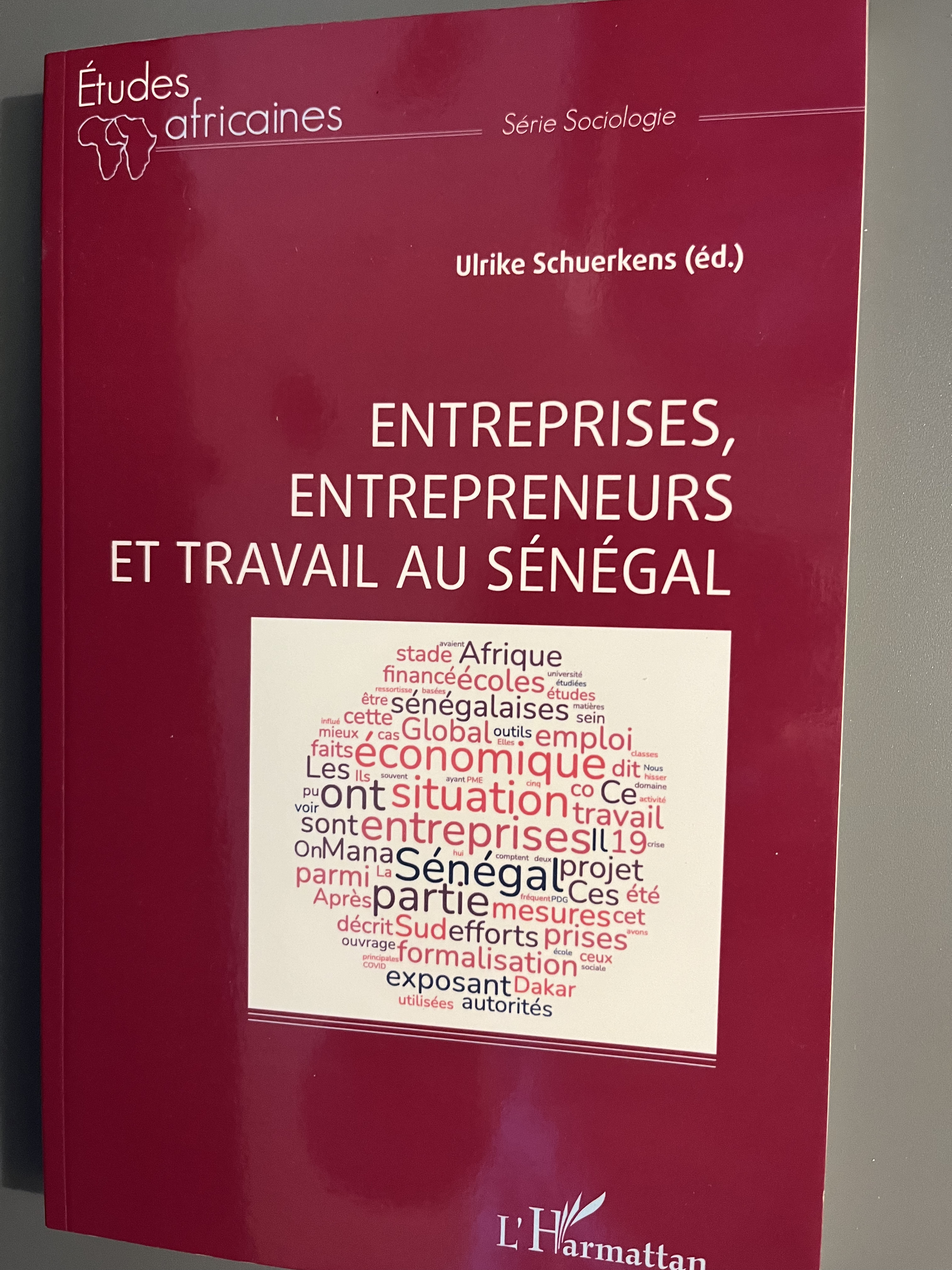
How important are African cultures in the economic systems of sub-Saharan Africa, and Senegal in particular? The first part of this study analyses the Senegalese economy and the measures taken to improve this situation and the integration of the population into the modern economic system. The second part brings together case studies based on an analysis of the professional and personal careers of a number of entrepreneurs. They show how these entrepreneurs have been able to make their businesses profitable: certain sectors, neglected by the major international groups, are those in which a generation of people in their forties and fifties is investing. The professional future of a large part of the population therefore depends on businesses that we need to support and sustain in order to create jobs, generate growth, encourage innovation and initiate a transformation.
ROȘCA, Dorina. A Transnational Exchange Mechanism Among Moldovan Migrants in the Parisian Region. Exploring “The Post Office of Moldova.” In: Economy and Sociology, June Nr.1/2023. Pp. 7-18. DOI: https://doi.org/10.36004/nier.es.2023.1-01. ISSN 1857-4130.
Abstract
This article explores the exchange of parcels between Moldovan immigrants in Paris and their connections in Moldova, using 2017 ethnographic data from the Moldovan community in Paris. It challenges traditional push-pull theories, focusing instead on these exchanges’ social and symbolic significance. The study reveals how parcel exchange has become a social institution, maintaining ties between Moldova and its diaspora. Termed the “Post Office of Moldova” by migrants, this mechanism involves both commercial and non-commercial elements, integrating the immigrant community. The motivations behind these exchanges are analyzed through the lenses of reciprocity, redistribution, and altruism, highlighting their reciprocal nature.
ROȘCA, Dorina. In Search of a Lost Market: The Features of Moldovan Capitalism Today. In: Journal of Romanian Studies. 2022, vol. 4, no. 1, pp. 83-104. DOI: 10.3828/romanian.2022.6. ISSN 2627-5325.
Abstract
This article examines the overlooked nature of post-Soviet Moldovan capitalism, critiquing the prevalent use of neoclassical economic theory by local scholars and NGO experts. It suggests that existing analyses often misalign with the realities of Moldovan capitalism, proposing instead a Polanyian perspective focused on the “logic of reciprocity.” This approach views the Moldovan economy from the perspective of reciprocal informal economic and social exchanges, as evidenced by monetary and in-kind transfers from Moldovan emigrants. The study highlights that Moldovan socioeconomic interactions are deeply rooted in local moral and social norms. Additionally, it explores how this reciprocity coexists with Moldova’s oligarchic political economy, shaping the unique dynamics of its capitalist system.
ROȘCA, Dorina. The Post-Soviet Moldovan Capitalism: Between Oligarchic Political Economy and Reciprocity. Post-Communist Economies. 2022, vol. 34, nr. 1, pp. 52-70. DOI: 10.1080/14631377.2020.1793583. ISSN 1463-1377.
Abstract
This article employs an interdisciplinary approach to explore the dynamics of post-Soviet Moldovan capitalism over the past 30 years. It begins with an analysis of the economic shifts in the 1990s, crucial for understanding later developments. The research uses Karl Polanyi’s economic integration framework to reveal Moldova’s socio-economic system as a blend of reciprocal and oligarchic elements. The study highlights how emigration and remittances have fostered a reciprocity-based economy, compensating for the state’s shortcomings in redistribution. Concurrently, the entanglement of state and private interests bolsters oligarchic dominance in key economic areas, influencing societal exchange and redistribution. This convergence of reciprocal and oligarchic forces has significantly shaped Moldovan capitalism.
ROȘCA, Dorina. COTOVANU, Lidia (coord.). Republica Moldova: 30 de ani în 30 de cuvinte. Chișinău: Cartier, 2022. ISBN: 9789975865630.
Abstract
This book addresses three key imperatives. First, it encapsulates the Republic of Moldova’s 30-year journey since 1991, using concepts that offer a comprehensive view of the era’s ethos. Second, it positions the Moldovan context within social sciences, underscoring its inherent heuristic value. This work aims to re-establish the Moldovan field, spotlighting its identity and research significance through thirty defining words, each affirming its research legitimacy. Third, our collective endeavour enriches the theoretical, conceptual, and methodological apparatus essential for exploring the Moldovan terrain.
Staines, Z., Smith, K., Plage, S., Lata, L.N., Fay, S., Zheng, Z., Reeves, L.S., Beazley, H., Kuskoff, E., Clarke, A. and McGowan, G., 2023. Social science as social action to address inequalities. Australian Journal of Social Issues. https://doi.org/10.1002/ajs4.272
Abstract
In its most recent report, the Academy of the Social Sciences Australia (ASSA, 2021: 10) identified social inequality as a “grand challenge” for the social sciences, arguing that social scientists have a pivotal role to play in “understanding, addressing and guiding us towards a narrowing of a two-tier society.” Nevertheless, the social sciences continue to be regularly positioned as “soft” and esoteric in relation to the natural sciences, while also sustaining disproportionate funding cuts. In this article, we—a multidisciplinary group of social science researchers forming part of the Inequalities and Social Action Research Cluster based at The University of Queensland (Australia)—draw on the existing literature and our diverse experiences to reflexively consider how academic social scientists might play the active role that ASSA foresees to address social inequalities into the future. This includes by countering the inherent imperialism of the Western academy itself. We explore the roles, barriers and tensions that social scientists face and conclude by offering a framework of key strategies to improve the translational impacts of social science research for addressing social inequalities.
Holtum, P.J.P., Lata, L. and Marston, G. Be your own boss The role of digital labour platforms in producing migrant masculinity (ies). In Migratory Men: Place, Transnationalism and Masculinities, edited by Garth Stahl and Yang Zhao. 2023. Routledge.
Abstract
A large proportion of low-skilled migrant workers use the personalised transport industry (such as taxis, limousines and ridesourcing) as an entry point into labour markets. This chapter explores the nexus of migrant masculinities, work and digital labour platforms (DLPs). Highlighting the ways in which DLPs capitalise on the precarity of migrant populations to exploit them for cheap labour, it draws on research from Uber driver-partners in south-east Queensland to illustrate how the platform both capitalises on migrant populations and serves as a valuable mechanism to validate migrant male masculinity. The chapter demonstrates how migrant men are able to construct a masculinity which is culturally validated in their communities as well as in mainstream Australian society. It presents three case studies to illustrate how masculinity is performed in a way that fosters unique hybrid identities.
Khoo, S (2023) Connecting Sociologies of Extraction, Monoculture and Pollution, in GK Bhambra; L. Mayblin, K. Medien; M. Vivero Vigoya, (Eds.) Sage Handbook of Global Sociology. Sage Publications. https://uk.sagepub.com/en-gb/eur/the-sage-handbook-of-global-sociology/book277822
Khoo, S (2023) ‘Creative Research Methods and Ethics’, in H. Kara (Ed) Bloomsbury Handbook of Creative Research Methods. London: Bloomsbury, pp 8-19 https://www.bloomsbury.com/uk/bloomsbury-handbook-of-creative-research-methods-9781350355750/
Khoo, S (2023) ‘On public goods, cursing and finding hope in the (neoliberal) twilight zone’, in L. Czerniewicz and C. Cronin (eds) Higher Education For Good. Open Book Publishers, pp 52-65 https://www.openbookpublishers.com/books/10.11647/obp.0363Khoo, S (2023) Humane security: solidarity in policy and practice, Journal of Human Development and Capabilities https://doi.org/10.1080/19452829.2023.2200241
Khoo, S (2023) The public epistemic role of higher education for all, in RJ Lawrence (ed) Handbook of Transdisciplinarity: Global Perspectives, Cheltenham: Edward Elgar, pp 63-79 https://www.e-elgar.com/shop/gbp/handbook-of-transdisciplinarity-global-perspectives-9781802207828.html
Kuhn,C; Khoo, S; Czerniewicz, L; Lilley, W; Bute, S; Crean, Abegglen, A; Burns, T; Sinfield, S. (2023) Understanding Digital Inequality: a Theoretical Kaleidoscope, Postdigital Science and Education https://doi.org/10.1007/s42438-023-00395-8
Floss, M; Abelsohn, A; Kirk, A; Khoo, S; Saldiva, PHN; Umpierre, RN; McGushin, A; Yoon S (2023) An International Planetary Health for Primary Care Massive Open Online Course, The Lancet Planetary Health, 7, February 2023, 172-178 https://www.sciencedirect.com/science/article/pii/S2542519622003072
Khoo, S (2023) ‘The Digital Republic: On Freedom and Democracy in the 21st Century’, Policy and Practice: A Development Education Review, Vol. 36, Spring, pp. 198-205. https://www.developmenteducationreview.com/issue/issue-36/digital-republic-freedom-and-democracy-21st-century
Hosseini, S. A. H. and Gills, B. K. Capital Redefined: A Commonist Value Theory for Liberating Life. 2024. Routledge. https://www.routledge.com/Capital-Redefined-A-Commonist-Value-Theory-for-Liberating-Life/Hosseini-Gills/p/book/9781032374765
The Open Access version of this book, available at http://www.taylorfrancis.com, has been made available under a Creative Commons Attribution-Non Commercial-No Derivatives (CC-BY-NC-ND) 4.0 license..
Abstract
Capital Redefined presents a unique perspective on the nature of “capital,” departing from the prevailing reductionist accounts. Hosseini and Gills offer an expanded perspective on Marxian value theory by addressing its main limitations and building their own integrative value theory. They argue that the current understanding of “value” must be re-examined and liberated from its subservient ties to capital while acknowledging the ways in which capital appropriates value. This is achieved by differentiating between “fetish value” created by capital and “true value” generated through various commons-based forms of coexistence.
The authors propose a defetishization of value by rejecting the commonly accepted idea of its objectivity. They introduce their “commonist value theory,” which redefines capital as both the product and process of perverting the fundamental commoning causes of true value into sources of fetish value. Capital is theorized through a “modular” framework, where multiple intersecting processes constitute a comprehensive power structure, a “value regime,” representing an unprecedented degree of the domination of capital over life. Their theory reconciles two apparently incompatible views on the notion of value. One view encompasses all inputs involved in capitalist value production and conflates intrinsic and commodity values. The other warns against this conflation as it treats capital as an entity tightly associated only with commodity production and wage labor.
The authors believe that establishing alternative forms of value creation based on normative principles of living in commons is crucial as an analytical base for criticizing existing power structures and economic systems. The book offers a theoretical foundation for transforming our life worlds toward “post-capitalist” futures. It appeals to scholars and students in various fields, such as political economy, capitalism, and post-capitalist studies, economic and political sociology, globalization, development studies, social ecology, and ecological philosophy.
Critique’s review:
The critical acclaim for “Capital Redefined” has been exceptional, with renowned scholars praising its substantial contributions to the reimagining of Marxian value theory through a commonist perspective with the purpose of tackling the challenges of the 21st century. Leslie Sklair, Emeritus Professor of Sociology at the London School of Economics, hails it as a “challenging contribution” to our understanding. Paul James, Professor of Globalization and Cultural Diversity at Western Sydney University, emphasizes its relevance to the future of human productivity. Ariel Salleh, Distinguished Visiting Scholar at Queen Mary University of London, appreciates its open-ended approach. William K. Carroll, Professor of Sociology at the University of Victoria, Canada, finds it timely for our troubled times. James Goodman, Professor of Social and Political Sciences at the University of Technology Sydney, finds it essential for envisioning post-capitalist possibilities. Hans A. Baer, Principal Honorary Fellow at the University of Melbourne, describes it as an indispensable literary companion for those exploring revolutionary potentials. Jamie Morgan, Professor of Economics, commends its reimagining of value theory in the age of climate and ecological emergency. Ulrich Brand, Professor of International Politics at the University of Vienna, sees it shaping the debate about radical political strategies. Saturnino M. Borras Jr., co-editor of The Oxford Handbook of Land Politics, calls it a thought-provoking exploration. James Juniper, Ph.D., Conjoint Academic at Newcastle Business School, applauds its potential to invigorate progressive research and policy development. These endorsements offer a glimpse into the depth and significance of “Capital Redefined” and are well worth exploring further on the book’s webpage.
Lata, L.N., Spatial Justice, Contested Governance and Livelihood Challenges in Bangladesh: The Production of Counterspace. 2023. Routledge. https://doi.org/10.4324/9781003350095
Abstract
This book analyses the key livelihood and governance challenges that the urban poor experience while navigating public spaces in Dhaka, Bangladesh.
Using data collected through extensive fieldwork in Bangladesh, the book contributes to the emerging scholarship of resilient cities, gendered space, spatial justice, and poverty in cities of the Global South. The book assesses the everyday politics of survival for the urban poor; how the poor negotiate different levels of formal and informal modes of power and governance; and the dynamics of gender. It explores how tenuous counter-spaces are created when these factors combine to provide a valuable framework for work in other urban contexts in the Global South beyond Bangladesh. Using cross-disciplinary perspectives, this book investigates the issues of human development, urban governance, urban planning and the gendered nature of urban space to outline how these issues enable or constrain poor people’s livelihood practices and their rights to be in the city.
Exploring debates surrounding placemaking and inclusive cities and their connection to poor people’s livelihoods, this book will be of interest to scholars in the field of Sociology, Development Studies, Planning, Geography and Anthropology.
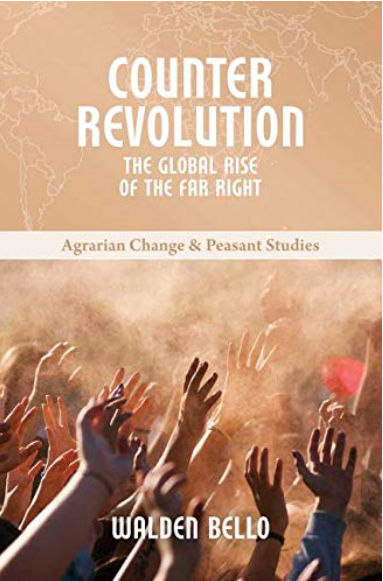 Bello, Walden. 2019. Counterrevolution: The Global Rise of the Far Right. Fernwood Publishing (Canada)/Practical Action Publishing (UK). Book Flyer
The far right is on the rise. The rhetoric of anger and resentment is emanating from personalities like Donald Trump, Marine Le Pen, Rodrigo Duterte and Viktor Orban and is captivating and mobilizing large numbers of people. In an increasing number of countries, the extreme right has already captured the government or is on the threshold of power.
While this swift turn of events has shocked or surprised many in the North, the extreme right’s seizure of power is not an uncommon event in the South. In Counterrevolution, Walden Bello deconstructs the challenge from the far right by deploying what he calls the dialectic of revolution and counterrevolution and harnesses the methods of comparative history and comparative sociology. Using case studies from Italy in the 1920s, Indonesia in the 1960s, Chile in the 1970s and contemporary Thailand, India and the Philippines, Bello lays bare the origins, dynamics and consequences of counterrevolutionary movements. Reflections on the rise of the right in the United States, Europe and Brazil round out this remarkable and timely study by one of the premier intellectuals of the South.
Walden Bello’s Counterrevolution is a bold, sweeping enterprise that seeks to deconstruct the challenge from the far right. Using as case studies Italy in the 1920s, Indonesia in the 1960s, Chile in the 1970s, and contemporary Thailand, India, and the Philippines, Bello lays bare the origins, dynamics, and consequences of counterrevolutionary movements. Reflections on the rise of the right in the United States, Europe, and Brazil round out this remarkable, timely study by one of the premier intellectuals of the South.
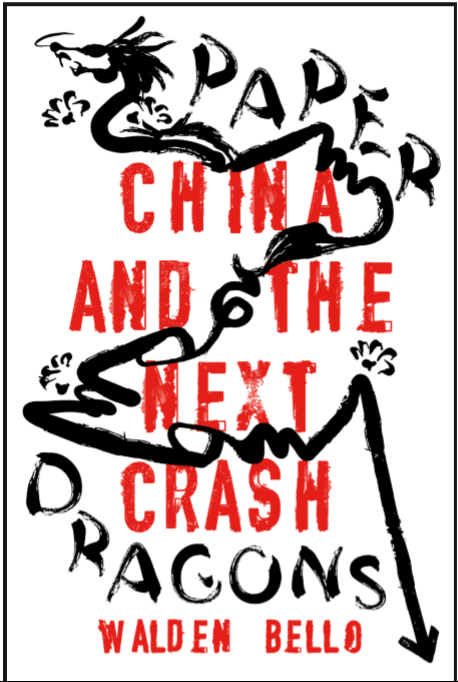 Bello, Walden. 2019. Paper Dragons: China and the Next Crash. Zed. Book Flyer
Emerging relatively unscathed from the banking crisis of 2008, China has been viewed as a model of both rampant success and fiscal stability. But beneath the surface lies a network of fissures that look likely to erupt into the next big financial crash. A bloated real-estate sector, roller-coaster stock market, and rapidly growing shadow-banking sector have all coalesced to create a perfect storm: one that is in danger of taking the rest of the world’s economy with it.
Walden Bello traces our recent history of financial crises – from the bursting of Japan’s ‘bubble economy’ in 1990 to Wall Street in 2008 – taking in their political and human ramifications such as rising inequality and environmental degradation. He not only predicts that China might be the site of the next crash, but that under neoliberalism this will simply keep happening. The only way that we can stop this cycle, Bello argues, is through a fundamental change in the ways that we organise: a shift to cooperative enterprise, respectful of the environment, and which fractures the twin legacies of imperialism and capitalism.
Insightful, erudite and passionate, Paper Dragons is a must-read for anyone wishing to prevent the next financial meltdown.
 Neubert, Dieter. 2019. Inequality, Socio-Cultural Differentiation and Social Structures in Africa: Beyond Class. Palgrave Macmillan.
This book contends that conventional class concepts are not able to adequately capture social inequality and socio-cultural differentiation in Africa. Earlier empirical findings concerning ethnicity, neo-traditional authorities, patron-client relations, lifestyles, gender, social networks, informal social security, and even the older debate on class in Africa, have provided evidence that class concepts do not apply; yet these findings have mostly been ignored.
For an analysis of the social structures and persisting extreme inequality in African societies – and in other societies of the world – we need to go beyond class, consider the empirical realities and provincialise our conventional theories. This book develops a new framework for the analysis of social structure based on empirical findings and more nuanced approaches, including livelihood analysis and intersectionality, and will be useful for students and scholars in African studies and development studies, sociology, social anthropology, political science and geography.
from the RC09 Newsletter Spring/Summer 2018
Genov, Nikolai. 2019. Challenges of Individualization. Palgrave Macmillan.
This book critically engages with a series of provocative questions that ask: Why are contemporary societies so dependent on constructive and destructive effects of individualization? Is this phenomenon only related to the ‘second’ or ‘late’ modernity? Can the concept of individualization be productively used for developing a sociological diagnosis of our time? The innovative answers suggested in this book are focused on two types of challenges accompanying the rise of individualization. First, it is caused by controversial changes in social structures and action patterns. Second, the effects of individualization question varieties of the common good. Both challenges have a long history but reached critical intensity in the advanced contemporary societies in the context of current globalization.
Heideman, Laura J. 2018. “Making Civil Society Sustainable: The Legacy of USAID in Croatia.” Voluntas 29(2):333-347.
What makes civil society sustainable? This paper examines USAID “Legacy Mechanisms”—programs designed to support a stable civil society after USAID withdraws aid—in the context of postwar Croatia to reconceptualize civil society sustainability in terms of resilience. Rather than examine whether specific legacy mechanisms remained intact, this paper looks at how Croatian civil society organizations adopted, adapted, and dropped these legacy programs to respond to novel crises and a changing political and social environment once USAID exited Croatia. Drawing on archival data from USAID’s time in Croatia and interviews conducted between 2008 (the year after USAID withdrew) and 2016, this paper shows that the long-term impact USAID had on civil society lay not within the formal institutions and organizations it supported, but in the resilience, creativity, and cooperation it fostered in the civil society sector.
Heideman, Laura J. 2017. “Cultivating Peace: Social Movement Professionalization and NGOization in Croatia.” Mobilization 22(3): 345-362.
Scholars studying social movements and non-governmental organizations (NGOs) have noted a rapid expansion in the number of professional organizations dedicated to creating social change. This study uses the case of the peacebuilding sector in Croatia (1991-present) to examine central questions in both fields: where professional organizations come from, what drives professionalization, and what the consequences of professionalization are for the work of social change. I find there are actually many paths to NGO creation, and identify five types of NGOs: transformed, new, bud, seed, and clone. These five types of organizations had different paths for development, have different levels of professionalization, and engage in different types of work based on their location and history. Examining the history of a social change sector shows professionalization to be a nuanced, uneven process that can expand the social change sector even as it transforms the sector’s work.
Jiménez, Jaime, Juan C. Escalante, Delfino Vargas, Rodolfo Ramírez, Leonardo Munguía, Brenda H. Molina. 2018. “National Laboratories: A Strategy for Scientific and Technological Development Geared to Innovation.” Sociology of Science and Technology 9(1): 73-85.
The concept of governmental financing of science and technology was born in the Western World as early as the 17th Century. Both Great Britain and France became aware of the need to protect and enhance the scientific achievements of their scientists, mainly for reasons of international prestige. The USA witnessed a spectacular growth of its scientific facilities in the 20th Century. The number of National Laboratories expanded out of the massive scientific effort developed during WWII that produced innovative technologies such as the radar, the computer, the proximity fuse and, unfortunately, the atomic bomb. The scale and impact of the mobilization of science for military purposes during WW II was extraordinary and unprecedented. The concept of National Laboratory gradually extended in the USA to include research institutions dedicated to areas of national interest like atmosphere, soil, oceans and health of the population. Although not necessarily identified as National Laboratories, they conserved the characteristic of being financed by the national government. Countries in the process of development have put a lot of interest in the creation and support of National Laboratories, or equivalents, as a strategy to enhance productivity and reduce the gap between developed and developing countries. The chain science─technology─innovation─applications is to be encouraged for both international prestige and increase in revenues at national and international levels. The federal agency that is in charge of planning and implementing Mexican science, technology and innovation policy is the National Council for Science and Technology (Conacyt, in Spanish). In 2006, the institution launched a National Laboratories program through a call for national laboratory candidates that is still in effect today. The applicants submit a project to Conacyt, and commit to the joint development of projects with one or more similar Mexican research institutions. Those who are approved are supported with funds to acquire necessary equipment. Conacyt’s ultimate aim is for the laboratories to become self-sufficient with the provision of services, as well as national and international referents in their field of knowledge. A preliminary presentation of a successful Mexican National Laboratory, the National Center of Imaging Studies and Medical Instrumentation (CI3M) is presented as a paradigmatic example of the track laboratories in the program should follow, which is aimed at satisfactorily accomplishing the objectives of human resource development, production of innovative technology, and provision of services. CI3M not only has fulfilled such areas but has become self-sufficient through the provision of services and the creation of their own enterprises.
Neubert, Dieter & Florian Stoll. 2018. “The “narrative of the African middle class” and its conceptual limitations.” Pp. 57-80 In Lena Kroeker, David O’Kane & Tabea Scharrer (Hg.) Middle Classes in Africa – Critiques and Realities. Palgrave.
The core of the ‘middle class narrative’ points to the purchasing power of the growing middle class and its stimulating effect on the African economy. Promoted by the media and consultancies, the term appears to relate to a growing, homogeneous, financially fluid, and politically outspoken section of society. Against this background, the main aim of this chapter is to discuss critically the conceptual limitations of this term – the African middle class. To date, social structure analyses relating to the Global South have analysed socio-economic ‘strata’; or ‘class’ in a (neo-)Marxist or Weberian sense; or ‘class’ without specific parameters. The existence of a middle socio-economic stratum, however, does not imply the presence of a socio-culturally homogeneous ‘class’ in Marxian or Weberian terms. To analyse socio-cultural differentiation we propose two concepts developed in German sociology: ‘socio-cultural milieus’ and ‘small lifeworlds.’
Neubert, Dieter & Achim von Oppen. 2018. “The Kenya we want! From postcolonial departure to recent hopes.” Bayreuth African Studies working papers 20. Academy reflects 4. Bayreuth: Institute of African Studies, 23.
At the eve of independence a conference on “The Kenya we want” discussed future visions for the development of independent Kenya. Since then conferences and books used this or a similar slogan as a heading for political programs for Kenya. The paper presents and discusses these different future visions in the context of political and social change in Kenya.
Neubert, Dieter. 2017. “Mobilität, Unsicherheit und verdeckte Schließung. Neuformierungen in der Mittelschicht Kenias.” In: Lessenich, Stephan (Hg.), Geschlossene Gesellschaft. Verhandlungsband des 38. Kongresses der Deutschen Gesellschaft für Soziologie.
The “African middle class“ is presented as a social reality. However, it is neither a class nor easily to be defined as a “middle.” This group may have a “middle income” compared to the large number of the poor and small top elite. However, most of the members of this “middle income group” have close kinship relation to the poor because of the absence of a formal social security system family in kinship that provides at least basic social security. As long as “middle income earners” stay in family and kinship relations they have the obligations to support poorer kin. This limits their chance of further upward mobility and accumulation. If they cut off these relations, they lose the security of the kinship system and risk to fall back into poverty in case of shocks. However, there is a small group of middle income earners whose kin is less established in the middle. Even when they have no top-positions they have the chance to stabilize their position in the middle. When we want to analyse social inequality we need to consider formal and informal systems of social security.
Pitluck, Aaron Z., Fabio Mattioli, and Daniel Souleles. 2018. “Finance beyond
function: Three causal explanations for financialization.” Economic
Anthropology 5 (2): 157-171.
This article suggests that it is advantageous for social scientists to deliberately depart from functionalist theories seeking to explain the expansion of financial instruments and logics across social life. Rather, we identify three causes of financialization from three extant clusters of scholastic activity: an organic political economy that sees finance expanding as a product or byproduct of larger state- and imperial-level political struggles, a relational sociology that sees the ways that finance expands by becoming another medium for expressing and constraining social relationships, and a cultural analysis that observes the increasing redefinition of discursive and material practices as financial. Across this larger discussion, we introduce and situate the contributions of the paper to this journal’s special issue on financialization.
Pitluck, Aaron Z., and Shikshya Adhikari. 2018. “Islamic Finance in the Global North: Secular Incubators, Elementary Accommodation and Strategic Negligence.” In Handbook of Contemporary Islam and Muslim Lives, edited by M. Woodward and R. Lukens-Bull: Springer Reference.
Dating from the mid-1970s, Islamic banking and finance (IBF) is an ongoing experiment to critique the conventional interest-based financial system and to construct an alternative “Sharia-compliant” industry. This chapter develops an analytic typology to describe how states respond to this project based on (1) whether the state practices industrial policy to promote the IBF industry and/or (2) whether it promotes a legislative and regulative divarication of the dominant financial market to accommodate IBF. This response can and does differ between the IBF wholesale and retail markets, and such government accommodations that are more important in retail than wholesale financial markets. This chapter develops this framework to investigate the social forces promoting and inhibiting Islamic finance in Muslim-minority countries in the global North. Specifically, it argues that Islamic finance has expanded in the United Kingdom after the state moved from a position of elementary accommodation to that of a secular incubator. In contrast, only wholesale Islamic finance has flourished in Luxembourg, in part because the state continues a strategy of elementary accommodation. More pointedly, in spite of a more favorable environment than either the United Kingdom or Luxembourg, in the United States IBF has failed to take root because of the government’s position of strategic negligence.
Povitkina, Marina and Ilona Wysmulek. 2017. “Quantitative methods in researching corruption: surveys, cross-national studies, and measurement issues.” In A. Schwickerath, A. Varraich & L.-L. Smith (eds.) How to Research Corruption. Conference Proceedings: Interdisciplinary Corruption Research Forum, pp. 25-34.
In this paper, we provide a brief overview of the main quantitative methods in researching corruption. We start with an introduction to the problem of measuring corruption and briefly elaborate on citizens and experts surveys as the main sources of data on corruption. We proceed by describing the main statistical methods and techniques used in corruption research. We also discuss the major benefits and pitfalls of quantitative methods in researching corruption and provide suggestions for future research. We conclude with a summary from the workshop on quantitative methods in researching corruption at the 1st Interdisciplinary Forum “How to Research Corruption” in Amsterdam, June 2016, stating the main aims, topics discussed, and contributions from the participants.
Wysmułek, Ilona. 2017. “Corruption in Schools? The Scale and Sources of Corruption Perceptions in Poland.” Edukacja 4(143): 41-55.
This paper analyses the scale and sources of views on the prevalence of corruption in the education sector in Poland. Through the use of public opinion surveys, I answer questions on how the corruption level in Polish educational institutions has changed over time and how it compares to other public institutions (such as the health care sector and police) and to the situation in other European countries. My goal is to investigate the effect of individual-level predictors of perceiving schools as corrupt in Poland, with special attention given to structural determinants and previous bribe-giving experiences of respondents. The results reveal that in Poland relatively few respondents have experienced recent acts of giving bribes in schools or perceive educational institutions as corrupt. However, there is a structural pattern behind the sources of negative opinions. The effect of socio-economic determinants on views relating to corruption in Polish schools is strongly pronounced and trends in the opposite direction compared to the effects reported in other European countries.
Wysmułek, Ilona, 2017. “Cross-national Surveys featuring Corruption Items in Europe (1989-2013)“, doi:10.7910/DVN/WRVUTZ, Harvard Dataverse, V2
This publication consists of an Excel file and the article accompanying it. The detailed source variables’ file is an Excel file that documents source variable name, question wording and response categories of corruption items as well as survey name, survey wave and year of survey wave where this item appears. Additionally, it also includes the country availability information, that allows for a check of availability of source data on corruption by country. The file includes information about 112 corruption items from 44 international survey project waves covering European countries in the period 1989-2013. The detailed source variables file includes only information on survey projects with less than ten corruption items per wave (not specialized surveys on corruption). The paper “Creating a ‘Common File’ of Source Variables for Ex-post Harmonization of International Surveys featuring Corruption Items,” accompanying the Excel file, provides details about the project and survey selection criteria.
from the RC09 Newsletter Fall 2017
Edwards, Zophia. 2017. “No Colonial Working Class, No Post-Colonial Development: A Comparative-Historical Analysis of Two Oil-Rich Countries.” Studies in Comparative International Development. Pp.1-23.
Development sociologists generally agree that states play a critical role in promoting, as well as in impeding, development. However, far less scholarly consensus exists on the precise historical processes that lead either to strong or to weak states. This paper investigates the factors that shape varied state capacities through a comparative-historical analysis of two similar countries with divergent development outcomes—Trinidad and Tobago and Gabon. In the 1960s, both countries had comparably large amounts of oil wealth, minimal state involvement in the economy, and low levels of development. In the 1970s, state capacity in Trinidad and Tobago dramatically increased and the country went on to achieve high levels of development. The Gabonese state, on the other hand, remained weak resulting in persistent low levels of development. This paper traces the divergence in state capacity to variations in working class mobilization, specifically the particular type of working class movements in each country and the political opportunity contexts. In doing so, this paper reveals new agents and contingencies producing state capacity that are not predominantly discussed in the contemporary development literature, and the meso-level mechanics by which these agents are successful or constrained in doing so.
Edwards, Zophia. 2017. “Resistance and Reforms: The Role of Subaltern Agency in Colonial State Development.” Rethinking the Colonial State. Political Power and Social Theory. Pp.175-201.
In the periods, following the First and Second World Wars, colonial states across the British empire underwent waves of reforms that were geared toward improving human well-being, from enhancing social conditions, such as health and education, to expanding opportunities for economic and political engagement. The literature on the colonial state typically traces these state-building efforts to the agency of European colonial officials. However, evidence from a historical analysis of Trinidad and Tobago reveals a different agent driving state reform: the colonized. A local labor movement during colonialism forced the colonial state to construct a number of state agencies to ameliorate the economic, political, and social conditions in the colony, thereby resulting in an increase in state capacity. This study, therefore, provides critical intervention into the colonial state literature by showing that the agency of the colonized, as opposed to just the colonizers, is key to state-building, and specifying the mechanisms by which the subaltern constrained colonial officials and forced them to enact policies that improved colonial state capacity.
Edwards, Zophia. 2017 “Boon or bane: Examining divergent development outcomes among oil-and mineral-dependent countries in the Global South.” International Journal of Comparative Sociology 58(4): 304-332.
Under neoliberal conditions that privilege foreign investors and call for the retreat of the state, some oil- and mineral-dependent countries in the Global South outperform others. To investigate what accounts for this variation in economic development among these countries, this study tests hypotheses derived from resource curse and dependency/world systems literatures using a dataset of 36 oil- and mineral-dependent countries in the Global South from 1984 through 2010 and panel methods of data analysis. The results show that state capacity and debt dependence shape uneven development outcomes among these countries. The implications for resource curse and dependency/world systems theories are discussed.
Elsen, Susanne. Forthcoming 2018. Eco-Social Development and Community-Based Economy. Routledge.
Harris, Joseph. 2017. “’Professional Movements’ and the Expansion of Access to Healthcare in the Industrializing World.” Sociology of Development (3)3: 252-72.
Explanations for the expansion of the welfare state have frequently centered on the importance of left-wing political parties and labor unions. Scholars have even pointed to the rare but growing significance of social democracy in the industrializing world. Yet, in the field of healthcare, labor unions frequently oppose sweeping universalistic reforms that threaten to erode members’ existing benefits, and those most in need of healthcare in rural areas and the informal sector are often the least organized politically. In the absence of mass demands, who then is responsible for universal healthcare programs in the industrializing world, and by what means do they successfully advocate for far-reaching reforms? This article explores the role that “professional movements” played in expanding access to healthcare in an industrializing nation that was engaged in processes of democratization. Mass movements are typically composed of lay people; by contrast, professional movements are made up of elites from esteemed professions who command knowledge, networks, and access to state resources that set them apart from ordinary citizens. The account illustrates how and why professional movements are able to play such a powerful role in health policymaking in the industrializing world, points to the need for more research on professional movements in other cases and policy domains, and discusses their relevance to social change in the industrializing world.
Harris, Joseph. 2017. Achieving Access: Professional Movements and the Politics of Health Universalism. Ithaca: Cornell University Press.
At a time when the world’s wealthiest nations struggle to make healthcare and medicine available to everyone, how and why do resource-constrained countries make costly commitments to universal health coverage and AIDS treatment after transitioning to democracy? While conventional wisdom suggests that democratization empowers the masses, Harris draws attention to an underappreciated dynamic: that democratization empowers elites from esteemed professions – frequently doctors and lawyers – who forge progressive change on behalf of those in need in the face of broader opposition. The book explores dynamics that made landmark policies possible in Thailand and Brazil but which have led to prolonged struggle and contestation in South Africa, extending lines of research related to health social movements and the professions, with implications for global/transnational sociology, the sociology of development and human rights, political and medical sociology, and comparative and historical sociology.
“Joseph Harris has written a masterful account about achieving access to health services and to AIDS medications in three countries—Thailand, Brazil, and South Africa. His book explains both successes and failures in six case studies. He focuses attention on a new idea: the critical role of professional movements in driving policy reforms to expand access. The book offers both theoretical and practical lessons, and will be welcomed by policymakers, academics, and activists. It is an important and readable addition to the literature on achieving access.” — Michael R. Reich, coauthor of Getting Health Reform Right.
“Through an in-depth analysis of three countries from different continents, this excellent book deepens scholarly understanding of the health care improvements resulting from democratization. In an innovative twist, Joseph Harris highlights how heightened political competition empowers progressive professional movements, which manage to promote poor people’s medical needs and interests against considerable resistance.” — Kurt Weyland, author of Making Waves.
“The excellent Achieving Access is very timely, and it helps us understand how specific policies came about (or didn’t) in Brazil, Thailand and South Africa. The reader feels intimately connected to the events that Joseph Harris describes. This is not just an account of lawyers and doctors, but of individual people.” — Joseph Wong, Ralph and Roz Halbert Professor of Innovation, Munk School of Global Affairs, University of Toronto, author of Betting on Biotech.
** Use Coupon Code 09FLYER to save 30% when purchasing directly from Cornell University Press ($20.96)
Hosseini, S. A. H. & Gills, B. K. (2017) Critical Globalization Studies and Development, in H. Veltmeyer & P. Bowles (eds.) The Essential Guide to Critical Development Studies (pp. 138-52), Abingdon, Oxon; New York, NY: Routledge.
Hosseini, S A H, Gills, B. K. & Goodman, J. (2017) Theorizing Alternatives to Capital: Towards a Critical Cosmopolitanist Framework, European Journal of Social Theory, 20(2), (Published online before print on April 10, 2016), pp. 1-18.
This article critically reflects on theoretical dilemmas of conceptualizing recent ideological shifts and contention among global transformative movements. Some studies conceptualize these movements as ideologically mature and coherent, while other inquiries highlight disorganization, fragmentation, disillusion, and dispute. The former line of argument suggests that underlying emerging global solidarities—to the extent they genuinely exist—there are some identifiably coherent cosmopolitanist, or globalist, values. The latter claim that existing global justice and transformative movements lack an effective ideological position for uniting the masses behind a global (political) project for transforming global capitalist social relations. By drawing upon an interpretive review of empirical studies conducted throughout the last decade, the article delineates four modalities, defined in terms of their orientations toward cosmopolitanist values. Among these modalities is a new and promising one, termed here as ‘transversal cosmopolitanist’ (‘transversal’ here understood as a process verb, indicating a new form of cosmopolitanist praxis). This approach assumes the possibility of creating a common ground for fruitful dialogue, constructive collective learning, progressive hybridization, and active political cooperation among diverse identities and ideological visions of contemporary global transformative movements, against existing capitalist social relations and structures of domination.
Hosseini, S A H, Gills, B. K. & Goodman, J. (2017) Towards Transversal Cosmopolitanism: Understanding Alternative Praxes in the Global Field of Transformative Movements, Globalizations, 14(5), pp. 667-84.
We are living in an era of multiple crises, multiple social resistances, and multiple cosmopolitanisms. The post-Cold War context has generated a plethora of movements, but no single unifying ideology or global political program has yet materialized. The historical confrontation between capital and its alternatives, however, continues to pose new possibilities for social and systemic transformations. Critical analysis of ideological divisions among today’s diverse emancipatory and transformative movements is important in order to understand past and present shortcomings, and many continuing difficulties in imagining crisis-free alternative futures. Inspired by a multiplicity of responses from the Global South and the Global North, and by furthering Delanty’s critical cosmopolitanist approach, this article aims to create a new framework for interpreting ‘transformative visions’ that challenge systems of domination embedded in capitalist social relations. The framework is designed to enable the evaluative analysis of such visions, as well as the exploration of embedded ideological obstacles to dialogue and collaboration among them.
Neubert, Dieter and Florian Stoll. 2017. The “narrative of the African middle class” and its conceptual limitations. Pp. 57-79 in Lena Kroeker, David O’Kane and Tabea Scharrer (eds.). Middle Classes in Africa – Critiques and Realities. Palgrave.
Villette, Michel and François Fourcade. 2017. “The incompatibility of worlds within a multinational corporation: The experience of a French expat in a Mexican factory.” Annales des Mines, Gérer et Comprendre, Annual English Selection, pages 1-12.
This ethnographic account of a managerial situation is a contribution to the new institutionalist studies of MNC based on the testimony of an expatriated French engineer in a Mexican factory. We try to make an in-depth analysis of the gap between what needed to be done in the Mexican context to make the factory profitable, and the good practices prescribed by the financial, technical, and legal services of corporate headquarters. Our analysis supports the theory of incompatible worlds (Lebenswelt) that multinational corporations often bring together. We highlight the translation-betrayals and deceptions that an expat has to accomplish, including whilst presenting the accounts, in order to avoid any obstacle caused by the incompatibilities that could jeopardize the factory’s smooth operations. We emphasize the arrangements the engineer had to negotiate to avoid, for example, the well-intentioned paternalism of a powerful potentate or the “tax” paid to local police in the name of an exogenous conception of law and ethics.
Wallimann, Isidor, ed. 2014. Environmental Policy is Social Policy – Social Policy is Environmental Policy: Toward Sustainability Policy. Springer Science & Business Media.
This book argues that social and environmental policy should be synthetically treated as one and the same field, that both are but two aspects of the same coin – if sustainability is the goal. Such a paradigm shift is indicated, important, and timely to effectively move towards sustainability. This book is the first to take this approach and to give examples for it. Not to synthetically merge the two fields has been and will continue to be highly insufficient, inefficient and contradictory for policy and public administration aiming for a transformation towards a sustainable world. In general, social problems are dealt with in one “policy corner” and environmental problems in another. Rarely is social policy (at large) concerned with its impact on the environment or its connection with and relevance to environmental policy. Equally, environmental problems are generally not seen in conjunction with social policy, even though much environmental policy directly relates to health, nutrition, migration and other issues addressed by social policy. This book intends to correct the pattern to separate these very significant and large policy fields. Using examples from diverse academic and applied fields, it is shown how environmental policy can (and should) be thought of as social policy – and how social policy can (and should) simultaneously be seen as environmental policy. Tremendous benefits are to be expected.
Wassan, MR, Hussain, Z, Shah, MA and Amin, SN. 2017. International labor migration and social change in rural Sindh, Pakistan. Asian and Pacific Migration Journal 26(3): 381-402.
This study examines why and how labor migration from a village in Sindh, Pakistan to Saudi Arabia has influenced changes for the left-behind families and the community. We find that while migration impacts positively on the material conditions of individual migrants and their families in the village, the potential of migration to impact on other aspects of living conditions, social change and development at community levels is shaped and often limited by existing structures of power, including gender structures and other socio-political structures. In the absence of investment in school infrastructures by the state, remittances from migration have not translated into improved educational outcomes for the children of migrants. We also find that the male migrants are leveraging their new status in the family to exercise more choice in marriage matters with possible negative impact on women.
Weiß, A., 2017. Soziologie Globaler Ungleichheiten. Berlin: Suhrkamp.
The sociology of social stratification is caught in a dead-lock: Data and concepts remain bounded by the nation-state while recent theorizing as well as popular debate focus on the global level. The book offers a sociological approach to global inequalities which is illustrated by results from two inter- and transnationally comparative research projects on skilled migration. Building on individualist traditions with their focus on the resources of persons and households but emphasizing the relational character of capabilities I take a closer look at the social contexts in which resources are put to use. In times of globalization we must assume that persons are placed in more than one social context and we should part with the assumption that the nation state can frame a congruent set of economic, political, cultural and territorial borders. By clarifying the ways in which persons and their resources are embedded in territorial, political, and functional contexts sociology can identify social layers in the world that are structured (a) by their resources and (b) by the socio-spatial autonomy of persons and resources. The proposed model of social layers in the world is adequate for both an analysis of populations residing in strong national welfare-states and for the larger part of humankind who is mobile and/or embedded in zones of weak statehood and/or in transnational social fields. As socio-spatial autonomy can be operationalized the model will contribute a distinctly sociological perspective to empirical research on global inequalities.
German
Die Soziologie glaubt immer noch an eine Welt starker nationaler Wohlfahrtsstaaten, die für ihre Bürger sorgen. Viele Menschen leben jedoch in Gebieten schwacher Staatlichkeit oder in Staaten, die sie bedrohen. Andere wandern zwischen Staaten oder arbeiten für transnationale Unternehmen. Anja Weiß plädiert in ihrem Buch für einen soziologischen Blick auf globale Ungleichheiten, der diese Kontexte jenseits des Staates endlich ernst nimmt. Dazu unterscheidet sie Räume, die territorial gebunden sind, von sozial differenzierten Feldern und politisch umkämpften Zugehörigkeiten. Lebenschancen, so eine ihrer Thesen, entstehen zwischen Personen und Kontexten – entsprechend heftig wird um den Zugang zu Letzteren gekämpft.
** The book is in German, but the following English publications offer summaries:
Weiß, A., 2005: The transnationalization of social inequality. Conceptualizing social positions on a world scale. Current Sociology 53: 707-728.
Weiß, A., 2018: Contextualizing global inequalities. A sociological approach. S. in: Korzeniewicz, R.P. & I. Wallerstein (Hrsg.). The World-System as Unit of Analysis: Past Contributions and Future Advances. New York: Routledge.
Weiß, A., 2018: Inequality and migration. S. 122-130 in: Antonelli, G. & B. Rehbein (Hrsg.). Inequality in Economics and Society. New Perspectives [Routledge Studies in Development Economics 138]. Abingdon, New York: Routledge.
from the RC09 Newsletter Spring 2017
Adebayo, Kudus Oluwatoyin, Olugbenga Samuel Falase, and Abel Akintunde. “‘Here, we are all equal!’: soccer viewing centres and the transformation of age social relations among fans in South-Western Nigeria.” Soccer & Society (2017): 1-17.
The spread of soccer viewing centres (SVCs) in Nigeria is one of the unfolding legacies of global sporting media in Africa. While, providing access to live broadcast of European soccer competitions, SVCs have developed into supplementary social spaces where culturally defined rules of social relations are contested. Using Goffman’s notion of performance and Agbalagba in Yoruba normative system, in conjunction with sociological perspective on space, the study explores the context and processes in the transformation of age social relations in Ibadan, South-Western Nigeria. Data were obtained through participant observation, and 23 in-depth interviews with viewing centre owners and soccer fans. Findings depict the SVC as a constructed space, with conflicting meanings, attitudes and practices, which inadvertently fracture and render fluid, the expectations of norms of age social relations. In conclusion, European soccer drives the spread of supplementary social spaces, which impact local social structures in critical ways.
Browne, Craig. 2017 Habermas and Giddens on Praxis and Modernity: A Constructive Comparison, London, Anthem Press.
‘Habermas and Giddens on Modernity: A Constructive Comparison’ investigates how two of the most important and influential contemporary social theorists have sought to develop the modernist visions of the constitution of society through the autonomous actions of subjects. It compares Habermas and Giddens’ conceptions of the constitution of society, interpretations of the social-structural impediments to subjects’ autonomy, and their attempts to delineate potentials for progressive social change within contemporary society. Habermas and Giddens are shown to have initiated new paradigms and perspectives that seek to address the foundational problems of social theory and consolidate the modernist vision of an autonomous society.
Browne, Craig. 2017. Critical Social Theory. London, Sage.
In this accomplished, sophisticated and up-to-date account of the state of critical social theory today, Craig Browne explores the key concepts in critical theory (like critique, ideology, and alienation), and crucially, goes on to relate them to major contemporary developments such as globalization, social conflict and neo-liberal capitalism. Critical theory here is not solely the work of Adorno, Horkheimer, Marcuse and Habermas. The book begins with the Frankfurt School but uses this as a base to then explore more contemporary figures such as: Nancy Fraser, Axel Honneth, Luc Boltanski, Cornelius Castoriadis, Ulrich Beck, Anthony Giddens, Pierre Bourdieu, Hannah Arendt. A survey of critical social theory for our times, this is an essential guide for students wishing to grasp a critical understanding of social theory in the modern world.
Dieter Neubert (2016) Kenya’s unconscious middle class? Between regional-ethnic political mobilisation and middle class lifestyles. In: Henning Melber (ed.), The rise of Africa’s middle class: Challenging the neo-liberal economy. London, Zed Books.
Genov, Nikolai (2017) ‘Information Resources in Upgrading Organizational Rationality’. In: Rončević, Borut and Tomšič, Matevž, Eds. Information Society and Its Manifestations: Economy, Politics, Culture. Frankfurt am Main: Peter Lang, pp. 23-40.
Genov, Nikolai (2016) ’Towards a Synergetic and Probabilistic Approach to Cross-border Migration’. International Journal of Social Sciences, Vol. 5, N 4, pp. 45-66.
The cross-border migration has multiple causes, variety of manifestations and potentials for diverging effects. Paradoxically, the mainstream theories on the phenomenon are onedimensional and deterministic. The effort to resolve the contradiction proceeds in four steps. First, mainstream theories of international migration are scrutinized for potential contributions to a synergetic and probabilistic conceptual framework. Second, the strategy for building the framework is outlined by elaborating on the components of the migration chain. Third, the components are integrated in a conceptual whole reflecting the multidimensionality and the variability of the migration’s structures and processes. Fourth, the capacities of the integrated framework to guide synergetic and probabilistic descriptions, explanations and forecasting of cross-border migration are put under scrutiny. The conceptual developments are tested with a view to the needs for efficient management of the cross-border migration flows.
Genov, Nikolai (2017) ‘Does Europeanization Foster Constructive Individualization?’ Comparative Sociology, vol. 16, N 2, pp. 183-212.
This paper aims at explaining changes in the conditions for individualization in ten central and eastern European (CEE) countries after they have joined the European Union in 2004 and 2007. The expected changes had to follow the transfer of the EU’s acquis communautaire to the CEE and the accompanying Europeanization understood as upgrading of governance. Indicators used in longitudinal studies are identified in order to test the assumption. Synchronic and diachronic comparison of outcomes of studies on the topic is carried out. The results don’t support the hypothesis about relevant changes in the conditions of individualization in the CEE countries due to their Europeanization. The upgrading of governance quality affects the individualization in the old and new EU member states similarly. Declining quality of the conditions for individualization appears in both groups of countries with the same frequency and intensity too.
Khondker, Habibul Haque “Globalization and Social Inequality” in International Review of Sociology. 32 (2) March, pp. 170 – 179.
Khondker, Habibul Haque (2016) “Globality and the Moral Ecology of the World: A Theoretical Exploration” in Protosociology, Borders of Global Theory, vol. 33, pp. 41 – 57.
Khondker, Habibul Haque (2016) “Entangled Globality” in Gunnar Olofsson and Sven Hort (Eds) Class, Sex and Revolutions: Goran Therborn A Critical Appraisal. Lund: Arkiv Forlag. pp. 321 – 336.
Sooryamoorthy, Radhamany (2017) Networks of Communication in South Africa: New Media, New Technologies. Cambridge: Cambridge University Press.
The book is about the development of communication patterns, social contacts and networks in South Africa. Based on pioneering quantitative and qualitative data, the book analyses trends in changing media use in Africa, showing the development of the use of new media for communication by South Africans of all ages, races and genders in relation to the development of media infrastructure, its cost and government policy.
Pamela Abbott. The Arab Transformations Project. University of Aberdeen, UK
The Arab Transformation Project is designed to stimulate research into the relationship between political beliefs, values, and practices. The project contributes to evaluating country and regional socio-economic and political trends based on system-, meso-, and individual-level factors. This analysis contributes to understanding the root causes and results of the Arab uprisings, as well as examining the conditions of possible future developments. The core of the project was a public opinion survey carried out in six Arab countries (Egypt, Iraq, Jordan, Libya, Morocco and Tunisia in 2014). We have also complied a data base for the same six countries plus Algeria from 1960- 2015 made up of macro data, indexes and selected variables from public opinion polls including the World Values survey, Arab Barometer, Afro Barometer and the Gallup World Poll. The survey dataset and the specially compiled longitudinal database gathering 2000-2015 data makes it possible to look comparatively at trends in attitudes and behavior in the context of the social, political, and economic transformations in the Middle East and North Africa since the 2010-2011 Uprisings. The Arab Transitions project was funded through the European Commission’s FP7 framework. We are now writing up the main findings from the project for journal articles and monographs as well as engaging with policy makers and making the findings available in a series of policy briefs. The publications from the project to date including the reports submitted to the European Union, working papers, policy briefs and the survey data set and the longitudinal data base are available at https://www.researchgate.net/project/The-Arab-Transformations-Project.
Slomczynski, Kazimierz M., Irina Tomescu-Dubrow, Danuta Życzyńska-Ciołek, Ilona Wysmułek, eds. 2016. Dynamics of Social Structure: Poland’s Transformative Years, 1988–2013. Warsaw, Poland: IFiS Publishers.
This book explores main social and economic phenomena that, across nations, are fundamental to transformations of the social structure: labor market processes, precarity, processes and mechanisms of inequality, and perceptions of attainment and of resource allocation. The idea of dynamic social structure implies that structures are changeable and produce tensions and conflict between people, groups, and institutions. The case of Poland demonstrates that social and economic phenomena related to the labor market remain major stratifying forces.
Slomczynski, Kazimierz M. and Ilona Wysmułek, eds. 2016. Social Inequality and the Life Course: Poland’s Transformative Years, 1988–2013. Warsaw, Poland: IFiS Publishers.
This book explores various aspects of social inequalities and their consequences for the life course of individuals. These include core issues of political sociology, such as voting representation and political attitudes and knowledge. Other elements of the life course this volume investigates pertain to education and skills, religiosity and health issues. The idea of life course implies that individuals and groups are best understood when key parts of their lives are studied and included in models accounting for their behavior and attitudes. The Polish Panel Survey, POLPAN 1988–2013, is the empirical foundation of this volume. POLPAN is the longest continuously run panel survey in Central and Eastern Europe that focuses on changes in social structure with individuals as the units of observation. The context of Poland’s transformation and the availability of this unique panel survey constitute a great opportunity to study changes in the social structures. Together with Dynamics of Social Structure: Poland’s Transformative Years, 1988– 2013 (IFiS Publishers, 2016), these two volumes belong to the series of books that use POLPAN to provide analyses of, and insights into Polish society. They are available at polpan.org.
Słomczyński, Kazimierz M., Irina Tomescu-Dubrow, J. Craig Jenkins, with Marta Kołczyńska, Przemek Powałko, Ilona Wysmułek, Olena Oleksiyanko, Marcin W. Zieliński and Joshua K. Dubrow. 2016. Democratic Values and Protest Behavior. Harmonization of Data from International Survey Projects. Warsaw: IFiS Publishers.
This book is a Technical Report on the logic of, and methodology for, creating a multiyear multi-country database needed for comparative research on political protest. It concerns both the selection and ex-post harmonization of survey information and the manner in which the multilevel structured data can be used in substantive analyses. The database we created contains information on more than two million people from 142 countries or territories, interviewed between the 1960s and 2013. It stores individual-level variables from 1,721 national surveys stemming from 22 well-known international survey projects, including the European Social Survey, the International Social Survey Programme, and the World Values Survey. We constructed comparable measures of peoples’ participation in demonstrations and signing petitions, their democratic values and socio-demographic characteristics. We complemented the harmonized individual-level data with macro-level measures of democracy, economic performance, and income inequality gathered from external sources. In the process, we pulled together three strands of survey methodology – on data quality, ex-post harmonization, and multilevel modeling.
Jiménez, Jaime, and Juan C. Escalante. (2017). “A Non-Linear Model for Career Development in Academia.” Journal of Unschooling & Alternative Learning 10(21).
Since the arrival of modern science, many of the professionals who wish to attain an academic career follow a track we call the linear model of accomplishment. Essentially, the model displays a number of sequential steps that each candidate, with minor variations, ought to take. In contrast, the non-linear model deals with professionals who are not able to follow the traditional model to achieve a full-fledged academic life, but that, with an evident scientific vocation, resume an academic career after a number of years dedicated to other professional activities. This paper shows that the systems principle of equifinality applies to career development in academia, by describing examples of linear and non-linear development that take place in traditional and nontraditional institutions in Mexico, respectively.
Dieter Neubert received a research grant from the Volkswagen Foundation in their programme “Opus Magnum”. The grant offers a one year sabattical (April 2017- march 2018) for writing a larger scholarly treatise. The topic is “Social Structures and Inequality in Africa”
The current discussion on African middle classes shows that neither the empirical reality of African societies with all their inequalities, nor conceptual developments in the social structure debate in sociology are adequately taken into account. Up to date an adequate approach to the analysis of inequality and social structures in sub-Saharan Africa is missing. A first problem is that the existing concepts were developed for the Global North, and that this fact has not been properly considered before applying them to sub-Saharan Africa. Secondly, international debates on the analysis of socio-cultural differentiations are dominated by Anglophone authors, and some very useful approaches developed in the German-speaking countries have been ignored; in particular this applies to the lifestyle and milieu approaches. Thirdly, approaches that have been applied in Africa at different times and from different perspectives are also ignored. Against this backdrop the first aim of the book is to bring together concepts from social structure analysis in sociology to form a multi-dimensional framework. The second aim is to integrate into this general framework knowledge about inequality and social structure in Africa from fields such as political sociology, poverty studies, economics, social anthropology, gender studies, geography and political science. Thirdly, because of the complexity of social structures and patterns of inequality in Africa, an attempt will be made to adapt and extend the existing sociological concepts, so that the book will contribute to the development of a “global sociology”.
from the RC09 Newsletter Fall 2016
Jaime Jiménez and Mónica N. Velasco E. 2016. “Alternative Learning and Research Leading to Development.” Athens Journal of Social Sciences 3(2): 113—125.
“The objective of this work is to report an experience of learning and research not following the traditional track, which is successful in preparing individuals to get a doctoral degree and, while getting the credentials, engage in research related to the needs and desires of the regions where they live. “
Khutkyy, Dmytro. 2016. “Review of the book Modern Societies: A Comparative Perspective, by Stephen K. Sanderson.” International Sociology Reviews 31(5): 567-570.
Arjomand, Saïd Amir. 2016. Sociology of Shiʿite Islam: Collected Essays . Stony Brook Institute for Global Studies Brill Publishing, ISBN:9789004312258, Hardback €150
Sociology of Shiʿite Islam is a comprehensive study of the development of Shiʿism. Its bearers first emerged as a sectarian elite, then a hierocracy and finally a theocracy. Imamate, Occultation and the theodicy of martyrdom are identified as the main components of the Shiʻism as a world religion. In these collected essays Arjomand has persistently developed a Weberian theoretical framework for the analysis of Shiʿism, from its sectarian formation in the eighth century through the establishment of the Safavid empire in the sixteenth century, to the Islamic revolution in Iran in the twentieth century. These studies highlight revolutionary impulses embedded in the belief in the advent of the hidden Imam, and the impact of Shiʻite political ethics on the authority structure of pre-modern Iran and the constitution of the Islamic Republic of Iran.
Arjomand, Saïd Amir. 2016. “Unity of the Persianate World under Turko-Mongolian Domination and Divergent Development of Imperial Autocracies in the Sixteenth Century,” Journal of Persianate Studies, 9.1, pp. 1-18.
Arjomand, Saïd Amir. 2016. “State Formation in Early Modern Muslim Empires: Common Origin and Divergent Paths,” Social Imaginaries, 2.2, pp. 35-51.
Arjomand, Saïd Amir. 2017. “The Rise of Interdisciplinary Studies in Social Sciences and Humanities and the Challenge of Comparative Sociology,” European Journal of Social Theory, 20.2.
Schuerkens, Ulrike. 2017. Social changes in a global world (1st edition). Thousand Oaks, CA: SAGE Pub. Paperback ISBN 9781473930223 £26.99
Ulrike Scheurkens presents an in-depth exploration of social transformations and developments. Combining an international approach with up-to-date research, the book: Has dedicated chapters on contemporary topics including technology, new media, war and terror, political culture and inequality Includes an analysis of societal structures – inequality, globalization, transnationalism. It contains learning features including: discussion questions, annotated further reading, chapter summaries and pointers to online resources to assist with study.
Schuerkens, Ulrike (ed.) 2016. Global Management, Local Resistances: Theoretical Discussion and Empirical Case Studies , Université Rennes 2 and EHESS, France, Routledge Publishers, paperback ISBN 978138700765 £34.99
from the RC09 Newsletter Summer 2016
Genov, Nikolai (2015) ‘The European Union and Its Eastern Partnership: Explanation and Regulation of Migration Flows’. Ukrainian Socium, N4, December, pp. 8-22;
Genov, Nikolai (2015) ‘Cross-border Migration: Explanatory Schemes and Strategies for Management“. In: Elena Danilova, Matej Makarovic, and Alina Zubkovych (Eds.). Multi-faced Transformations: Challenges and Studies. Cambridge: Cambridge Scholars Publishing, pp. 11-36.
Genov, Nikolai (2016) ‘Eastern Europe as a Laboratory for Social Sciences’. In: Eliaeson, Sven, Lyudmila Harutyunyan and Larissa Titarenko (ed.) After the Soviet Empire. Legacies and Pathways. Leiden and Boston: Brill, pp. 135-163. ISBN 978-90-04-29144-7.
Genov, Nikolai (2016) ’Competing Sociological Diagnoses of Contemporary Times: Potentials of the RISU Conceptual Framework‘. International Journal of Social Science Studies, Vol. 4, No. 1; January, pp.86-98.
Khondker, H. H. (2016). “Nationalism and the ‘politics of national identity’.” In Ali Riaz and M. Sajjadur Rahman (Eds.), Routledge Handbook of Contemporary Bangladesh Milton Park, Abingdon, Oxon. and New York: Routledge (Taylor and Francis). (pp. 28-39).
Khondker, H. H. (2016) “Famine” Blackwell Encyclopedia of Sociology, Edited by George Ritzer, UK: Blackwell Publishing Company. (Accepted for publication)
Khondker, H.H., (2015). “New Media, Political Mobilization, and the Arab Spring.” In: James D. Wright (editor-in-chief), International Encyclopedia of the Social & Behavioral Sciences, 2nd edition, Vol 16. Oxford: Elsevier. pp. 798–804.
Khondker, H. & Jahan, M. (2015). Coping and Overcoming: South Asian Domestic Workers in the United Arab Emirates. In Ajaya Kumar Sahoo (Ed.), Diaspora, Development and Distress. New Delhi: Rawat Publications. pp. 181-200.
Khondker, H. (2015). “Bangladesh: History, Culture and Global Diplomacy”. Asian Journal of Social Science, 43, 635-647.
Khondker, H. H. (2015). “From the Silent Spring to the Globalization of Environmental Movement”. Journal of International and Global Studies, 6 (2), 12.
Khondker, H. H. (2016). “Nationalism and the ‘politics of national identity’.” In Ali Riaz and M. Sajjadur Rahman (Eds.), Routledge Handbook of Contemporary Bangladesh Milton Park, Abingdon, Oxon. and New York: Routledge (Taylor and Francis). (pp. 28-39).
Khondker, H. H. (2016) “Famine” Blackwell Encyclopedia of Sociology, Edited by George Ritzer, UK: Blackwell Publishing Company. (Accepted for publication)
Khondker, H.H., (2015). “New Media, Political Mobilization, and the Arab Spring.” In: James D. Wright (editor-in-chief), International Encyclopedia of the Social & Behavioral Sciences, 2nd edition, Vol 16. Oxford: Elsevier. pp. 798–804.
Khondker, H. & Jahan, M. (2015). Coping and Overcoming: South Asian Domestic Workers in the United Arab Emirates. In Ajaya Kumar Sahoo (Ed.), Diaspora, Development and Distress. New Delhi: Rawat Publications. pp. 181-200.
Khondker, H. (2015). “Bangladesh: History, Culture and Global Diplomacy”. Asian Journal of Social Science, 43, 635-647.
Khondker, H. H. (2015). “From the Silent Spring to the Globalization of Environmental Movement”. Journal of International and Global Studies, 6 (2), 12.
Tomescu-Dubrow, Irina, Kazimierz M. Slomczynski, Henryk Domanski, Joshua Kjerulf Dubrow, Zbigniew Sawinski, and Dariusz Przybysz. Dynamic Class and Stratification in Poland. Forthcoming from CEU Press.
Past RC09 Publications
Schuerkens, Ulrike. Ed. Socio-economic Outcomes of the Global Financial Crisis : Theoretical Discussion and Empirical Case Studies. 4/2012, xvi-262 p. (Ebook and hardback)
—-. Globalization and Transformations of Social Inequality. Routledge. New York, 5/2010, xvi-296p.; (ebook and hardback; paperback 2012). ISBN: 978-0-415-87482-3. Publisher’s Order Information.
—-. Local Socio-economic Practices and Globalization. Routledge, New York, 10/2007, x-214p. (Hardcover, E-book; paperback in 2012)
—-. “Transnational Migrations and Social Transformations.” Current Sociology, 4, 53, 2, 2005, 250p.
—-. Social Transformations between Global forces and Local Life-worlds. x-246p., 2004 (London, SAGE and n° double de Current Sociology, 51, 3/4, 2003 and E-Book, 2006).
 The Research Committee 09 - Social Transformations and Sociology of Development